 |
| Above: weight loss. |
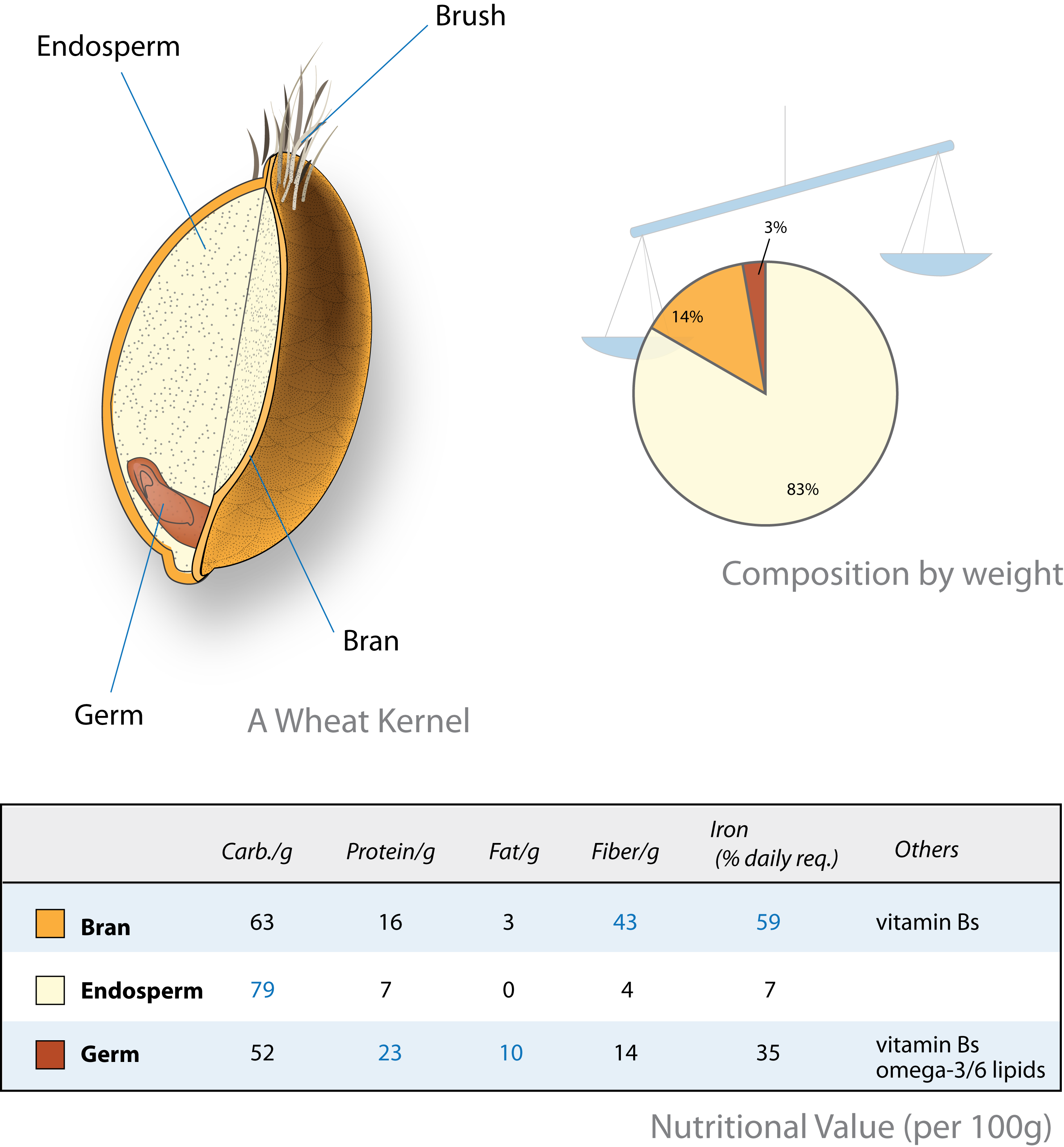
But first, what exactly is the difference between the two? From first glance, all you can really see is the color; whole grains are brown, refined ones are white. So what? Well, the reason whole grains are brown is because of the milling process for the grains. There are three parts of a kernel of grain: the bran, endosperm, and germ.

During the milling process, there are two options. You can remove the bran and germ, keeping only the endosperm. This is what refined, "white" flour is made of. Or, you can keep it all and just grind it up to make whole wheat flour. A very intuitive name when you think about: using the whole kernel = whole wheat flour.
Losing the bran and germ in the production of white flour means a couple of things, though. First, the bran and germ is where all nearly all of the fiber in the grain is: nearly 95%. This key little reason is why white bread does such fun things as spike your blood sugar and make you gain weight easier: because it has almost no fiber to slow your body from absorbing the carbohydrates once you eat it. This can be a problem for everyone except maybe those annoying individuals who seem to be able to eat anything they want and never gain weight. If you're diabetic, looking to lose weight, or just looking not to gain it, white "refined" grains pose a problem. Refined grains are actually absorbed into your body at a rate closer to simple table sugar than anything else.
 |
| Pictured: white bread. |
Another thing about removing the bran and germ to make refined grains is what you leave: the endosperm. The endosperm doesn't have nearly as much in the way of nutrition as the other parts of the wheat kernel. Because of that, companies that make refined grain products are required to fortify them with five different nutrients: folic acid, riboflavin, thiamine, niacin, and iron. These are only the ones that are required to be added, though: they are not the only ones that are lost. So when you are eating refined grains, you are losing out on some of the nutrition that you could be getting from whole grain foods.
Whole grain products are definitely better for you from a diet and health standpoint, but here's the big question: are they all they're made out to be? Many, many studies have shown that eating whole grains instead of refined ones can do all sorts of good things for you, such as lowering the risk of obesity, stroke, heart disease, and all sorts of other little evils in your body.
These are all great reasons to, when you can, make the switch from refined to whole grains. It makes your body smile inside.
 |
| He just ate some whole wheat bread. |
So go for whole grains when you can: but be warned. Food companies are trying to exploit this. They sometimes add small amounts of whole grains into their products of mostly refined grains, just so they can get the label on there and make you think it's healthy. You'll see this label on food items to let you know:

If the label is on something like a 300-calorie donut, though, it's not doing you very much good. Get your whole grains, but be wary about where you find them: there is a lot of false advertising around. Be the smart consumer that I know you are, however, and I'm sure you won't have any problem being on your way to better health!

No comments:
Post a Comment